2 How Much Gets Missed — What Unclaimed-Credit Research Shows
Question for this chapter. Do people who qualify for a refund or a credit actually fail to claim it? If so, how many? And why do they miss it?
Short answer. Statistics published by the Internal Revenue Service (IRS) show that some people who qualify do not claim. For the Earned Income Tax Credit (EITC), the IRS reports a participation rate of 80.8%. The rough unclaimed rate that follows from it is 19.2%. An older study by the U.S. Government Accountability Office (GAO) also found that some eligible households did not claim. These numbers rest on a model of who is eligible. They do not tell you that your household missed something. This chapter shows how to read these numbers and how to apply them, step by step, to one household.
2.0 Names and rules
This chapter has no calculation and no checklist card. It reads the research on how much goes unclaimed. First, here are the terms the chapter uses.
Term box — Earned Income Tax Credit (EITC). A U.S. tax credit that reduces tax for households whose income from work falls within a set range. Chapter 6 covers the requirements.
Term box — Participation rate and unclaimed rate. The participation rate is the share of people estimated to be eligible who actually claimed. The unclaimed rate is the other side: the share of people estimated to be eligible who did not claim.
Term box — Amended return. In the U.S., the process of correcting a federal income tax return you have already filed and submitting it again. It is the route to use when you find a deduction or credit you missed. Chapter 13 covers it.
Term box — Correction claim. In a country outside the U.S., the process a taxpayer uses to ask for a correction when the tax already reported was too high. Chapter 14 (where to start a home-country correction or refund claim, six countries) covers it. This chapter mentions it only as a cross-reference.
Every number in this chapter was counted by someone else. The chapter copies figures from IRS statistics and GAO research. For that reason, each number appears with its source. The values in this book are 2025 tax-year values. The statistics in this chapter come from earlier tax years, and each table says which year. The status label in the last table shows whether each transcribed value has been checked against the original document.
The book's approach is to check items you may have missed, together with the evidence and the assumptions behind them. This chapter is the first step. It asks whether missing a credit actually happens.
2.1 What the U.S. EITC participation rate shows
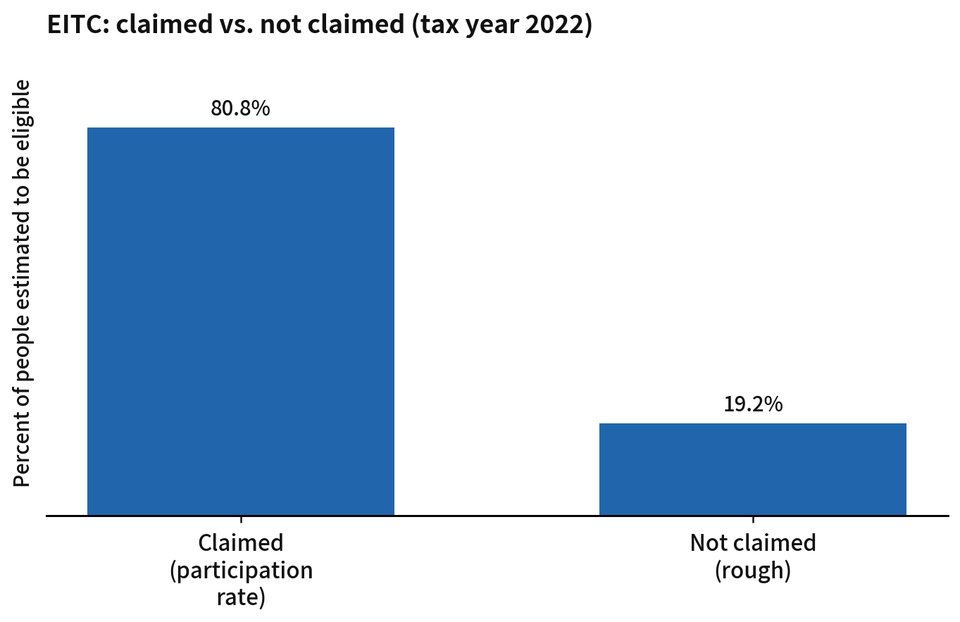
Figure 2-1. Shares of people estimated to be eligible, from IRS EITC Central. Both values depend on the model used to estimate who is eligible.
Explanation. When people in the U.S. talk about missed refunds, the most frequently cited figure is the EITC participation rate. The IRS publishes participation statistics on its EITC information site, EITC Central.
| Source | What was counted | Value | Evidence level |
|---|---|---|---|
| IRS EITC Central statistics | Share of eligible people who actually claimed (participation rate) | 80.8% | Depends on assumptions |
| Calculated from the rate above | Share of eligible people who did not claim (rough) | 19.2% | Depends on assumptions |
This statistic is for tax year 2022, the most recent year the IRS had published. That is earlier than tax year 2025, the year this book covers.
Assumption. The base of the participation rate is "people who are eligible." People who qualify but do not claim never appear on a tax return. So the IRS estimates the base with a model. If the model's assumptions change, the base changes, and the participation rate changes with it.
Example. Two households with ties to another country, both working in the U.S., read this statistic. The first household has not yet checked whether its income falls within the EITC range. The second household clearly earns more than that range. For the first household, the statistic is a reason to check. For the second, it has almost no bearing. The unclaimed rate describes the whole group of estimated eligible people. It does not say whether any single household missed the credit.
How to read it.
- The participation rate is the share of claimants among people estimated to be eligible. It is not a share of all U.S. taxpayers.
- The unclaimed rate is the participation rate turned around. It is not a separate survey result.
- The statistic counts people who claimed. The table does not tell you how much money went unclaimed.
- Whether your household is eligible is a separate check, using the requirements in Chapter 6.
2.2 Reading old research and recent statistics together
Explanation. Missing the EITC is not a new problem. The GAO studied the same question long ago. The GAO study, published in December 2001, used tax year 1999. That is about 25 years before the year this book covers.
| Source | Reference period | What was counted | Value | Evidence level |
|---|---|---|---|---|
| GAO study (published December 2001) | Tax year 1999 | Share of eligible households that claimed the EITC | 75% | Weak (old data) |
| IRS EITC Central statistics | Tax year 2022 | Share of eligible people who actually claimed | 80.8% | Depends on assumptions |
Assumption. The two sources measure very different years. The EITC's requirements and amounts may have changed in between. The methods used to estimate who is eligible may also differ. One source counts households and the other counts people. For these reasons, this chapter does not compare the size of the two values.
How to read it.
- Read the GAO study as history: it shows that missing the credit happened long ago too.
- To judge the current situation, look first at the recent IRS statistics.
- Before saying that participation "went up" or "went down," you would need to confirm that both sources counted the same way. This chapter does not make that check.
2.3 Two ways to miss money: not claiming and overpaying
Explanation. Money is not missed only by failing to claim. A household may also file a return and pay more tax than it owed. These are two separate routes.
| Route | What happens | Where this book covers correcting it |
|---|---|---|
| Not claiming | The household qualifies but never claims the credit | Chapter 6 (EITC eligibility), Chapter 13 (amended return) |
| Overpaying on a filed return | The household files but misses a deduction or credit, or reports too much | Chapter 13 (amended return); Chapter 14 (where to start a home-country correction or refund claim, six countries) for a return filed in the home country |
Keep the three numbers apart. The EITC participation rate counts people. It says nothing about three different amounts for any household: the amount that reduces taxable income or tax, the settlement difference on the return (tax owed compared with tax already paid), and the money that actually reaches the bank account. Chapter 1 and Chapter 20 set out this framework.
This chapter has no data on how many amended returns are filed in the U.S. or on their amounts. It does not estimate how much money is recovered through amended returns.
How to read it.
- A statistic about people who did not claim does not tell you about people who claimed but overpaid, and the reverse is also true.
- If your household filed every year, the question is not only "did we claim?" but also "did we claim everything we qualified for?"
2.4 Why people miss credits: information, procedure, fear
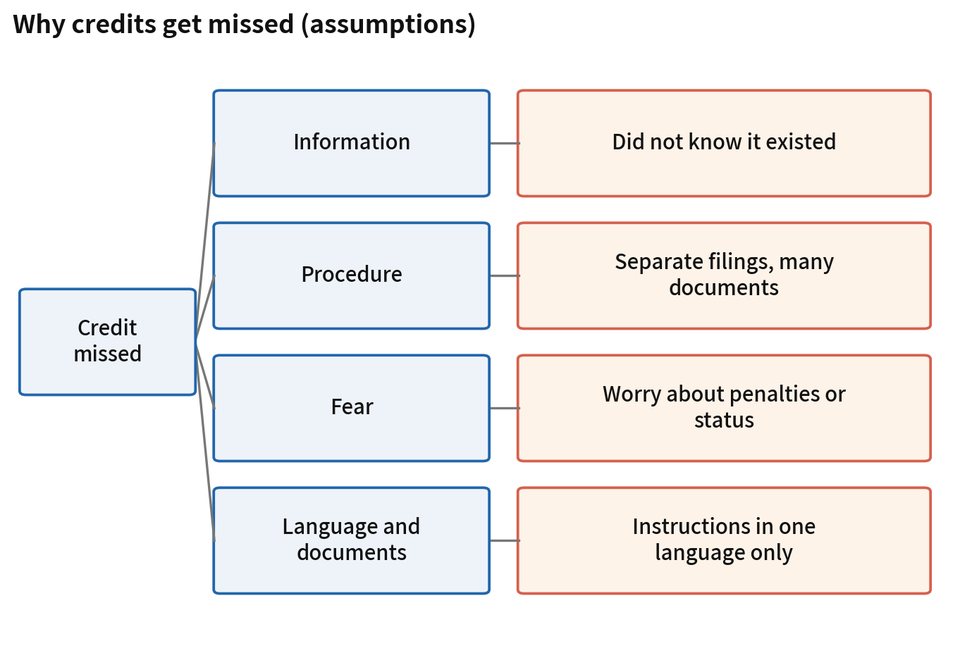
Figure 2-2. Four overlapping reasons drawn from how the system is built. They are assumptions, not research findings.
Explanation. The statistics show how many. They do not say why. The explanations below are assumptions drawn from how the system is built. They are not reasons confirmed by research. Treat them as weak evidence.
| Reason (assumption) | How the credit gets missed | What to check in a household with ties to another country |
|---|---|---|
| Information | The household does not know the credit exists, or does not know it qualifies | A year when income changed a lot, a year a child was born, a year with a move or a job change |
| Procedure | A return or claim must be filed separately, and there are many documents | Cases where a U.S. return and a return in another country both have to be handled |
| Fear | The household worries that a wrong claim will lead to a penalty | Worries about immigration status, or about how foreign income is reported |
| Language and documents | Instructions exist only in English or only in the other language | Using foreign documents for a U.S. return, or U.S. documents for a return abroad |
Example. A household that moved to the U.S. recently files its first federal income tax return. The household believes tax was fully settled through withholding. It has never heard of credits such as the EITC. In a year with some foreign income, the household worries about how to report that income on the U.S. return and puts off filing altogether. In this situation, what gets missed is not caused by one reason. Information, procedure and fear overlap. This chapter does not decide what this household actually missed. The situation is one to work through with the checking steps in Chapter 6, Chapter 13 and Chapter 14.
Assumption. These reasons overlap. The statistics in this chapter cannot show which reason matters most.
How to read it.
- Use the table as a checklist to think of reasons your household may have missed something.
- Items such as immigration status or the treatment of foreign income depend on facts this chapter does not cover. The table cannot settle them, and a household should not draw a conclusion about them from this table alone.
2.5 Applying the statistics to your own household
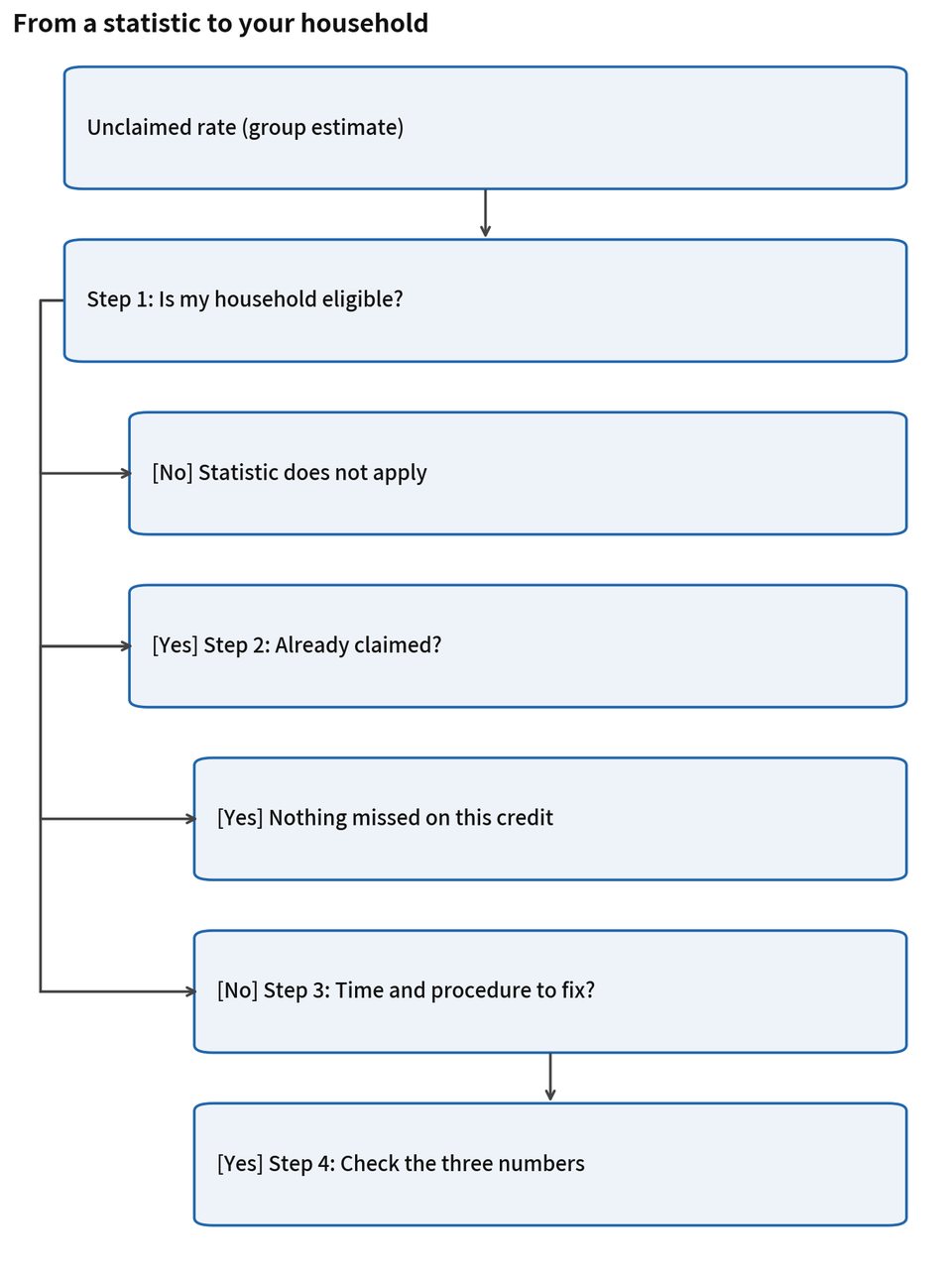
Figure 2-3. This book's checking order, not an official procedure. Do not skip the eligibility step.
Explanation. When you see an unclaimed rate, it is easy to think, "I must have money coming too." But there are several steps between a statistic and your household.
| Step | Question | Where this book covers it |
|---|---|---|
| First | Is my household eligible for the credit? | Chapter 6 (EITC) and the other checking chapters |
| Second | If eligible, did we already claim it? | Check past returns |
| Third | If we did not claim, is there still time and a procedure to correct it? | Chapter 13 (amended return), Chapter 14 (where to start a home-country correction or refund claim, six countries) |
| Fourth | If we correct it, what changes? | Each chapter's "keep the three numbers apart" explanation |
At the fourth step, look at three numbers separately: the taxable income or tax reduced by the credit or deduction, the settlement difference on the return, and the amount actually refunded. These three can differ.
Some services say they find missed refunds. Chapter 3 covers them. The statistics in this chapter are often cited as a reason such services are needed. But a statistic does not describe the situation of any one household.
Assumption. These steps are this book's checking order. They are not an official procedure.
How to read it.
- Do not skip the first step and jump to the third.
- A rate drawn from a statistic is not the answer to the fourth step.
FAQ
Question. If there is an unclaimed rate, does that mean I have money coming?
Answer. It cannot be read that way. The unclaimed rate describes the whole group of people estimated to be eligible. Whether your household is eligible is a separate check, in a checking chapter such as Chapter 6.
Question. Why does this chapter cite such an old GAO study?
Answer. It shows that missing the credit has been a problem for a long time. To judge the current situation, look first at the recent IRS statistics.
Question. Does this chapter cover benefits or refunds in other countries?
Answer. No. This chapter reads U.S. evidence only. Chapter 14 (where to start a home-country correction or refund claim, six countries) covers correction claims for a return filed in the home country.
What these numbers show
- U.S. evidence shows that some people who qualify for a credit they must claim do not claim it.
- The EITC statistics count the share of people who claimed. They do not count money. The GAO figure and the IRS figure come from different years and methods, so this chapter does not compare them directly.
- Money can be missed in two ways: by never claiming, or by filing and paying more than was owed. In the U.S., both lead to the amended return (Chapter 13).
Limits of this chapter
- The EITC participation rate rests on a model that estimates who is eligible. If the model's assumptions change, the participation rate and the unclaimed rate change together.
- The GAO study uses data from about 25 years ago. The credit and the estimation methods may have changed since, so it is not compared with the recent value.
- This chapter has no data on the number or amount of U.S. amended returns.
- This chapter does not use any unclaimed statistic counted separately for households with ties to another country. Applying the chapter's figures to these readers is an assumption.
- The explanations of why credits are missed (section 2.4) are assumptions drawn from how the system is built. They are not reasons confirmed by research.
- Statistics and programs in other countries are not covered.
What is confirmed / What cannot be decided yet / Information you need
What is confirmed
- IRS EITC Central publishes an EITC participation rate of 80.8% for tax year 2022. The rough unclaimed rate that follows from it is 19.2% (evidence level: depends on assumptions).
- The GAO reported, for tax year 1999, that 75% of eligible households claimed the EITC (evidence level: weak, old data).
What cannot be decided yet
- The statistics in this chapter cannot decide what any one household actually missed.
- Which direction the EITC participation rate has moved over time is not decided here, because the sources use different bases.
- The chapter's data cannot decide which reason (information, procedure or fear) matters most.
Information you need
- Your household's federal income tax returns for the past several years, and a record of which credits were claimed on them
- Records of life changes: years when income changed a lot, a child was born, or there was a move or a job change
- Income and tax filings in another country, including tax paid there and items that might be corrected
- Information for checking the EITC requirements (Chapter 6), and the time limits and documents for correcting a filed return (Chapter 13 for an amended return, Chapter 14 for a home-country correction claim)
- If you are considering a service that says it finds missed refunds, what evidence the service relies on (Chapter 3)
Key values and sources in this chapter
| Value | What it is | Status | Source |
|---|---|---|---|
| 80.8% | U.S. EITC participation rate (share of eligible people who actually claimed), tax year 2022 | Extracted value, review pending | IRS EITC Central statistics |
| 19.2% | Rough unclaimed rate calculated from the participation rate above | Extracted value, review pending | Calculated from IRS EITC Central statistics |
| 75% | Share of eligible households that claimed the EITC, tax year 1999 (data from about 25 years ago) | Extracted value, review pending | GAO study published December 2001 |